Student Supports
We believe every student deserves the support they need to succeed. Our range of academic, pastoral, and wellbeing services helps students develop confidence, resilience, and the skills to thrive both in and beyond the classroom.
Bi Cineálta
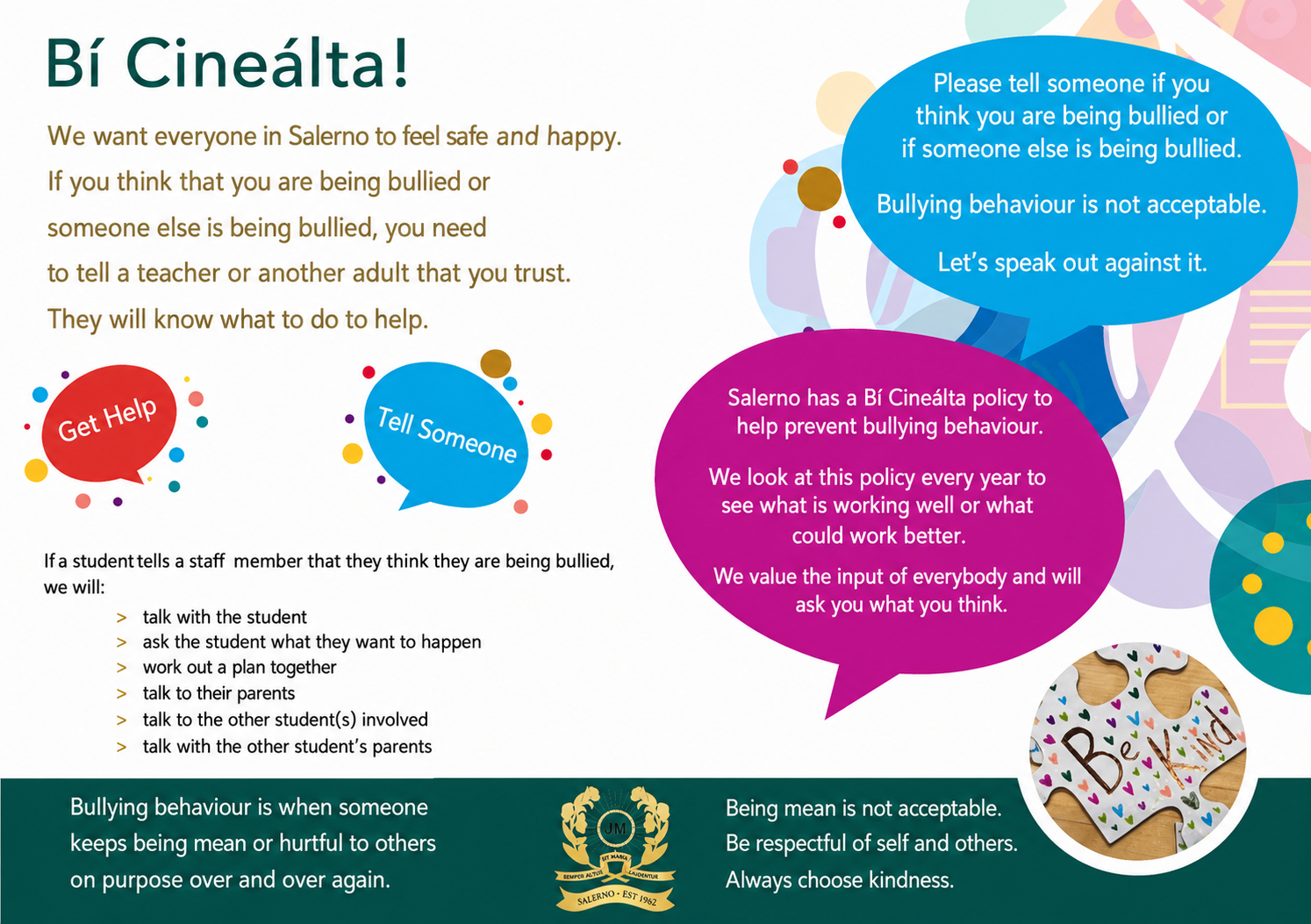
Our anti-bullying procedures promote a respectful, inclusive and supportive school community where every student feels safe, valued and heard.
- Positive relationships
- Respect & inclusion
- Anti-bullying procedures
Safeguarding
Safeguarding is central to school life. We are committed to providing a safe, caring and supportive environment where students can learn and thrive.
- Child safeguarding
- Student welfare
- Designated Liaison Person
Chaplaincy
Chaplaincy supports the spiritual, personal and emotional wellbeing of students through prayer, reflection, celebration and pastoral care.
- Pastoral support
- School liturgies
- Retreats & reflection
Guidance
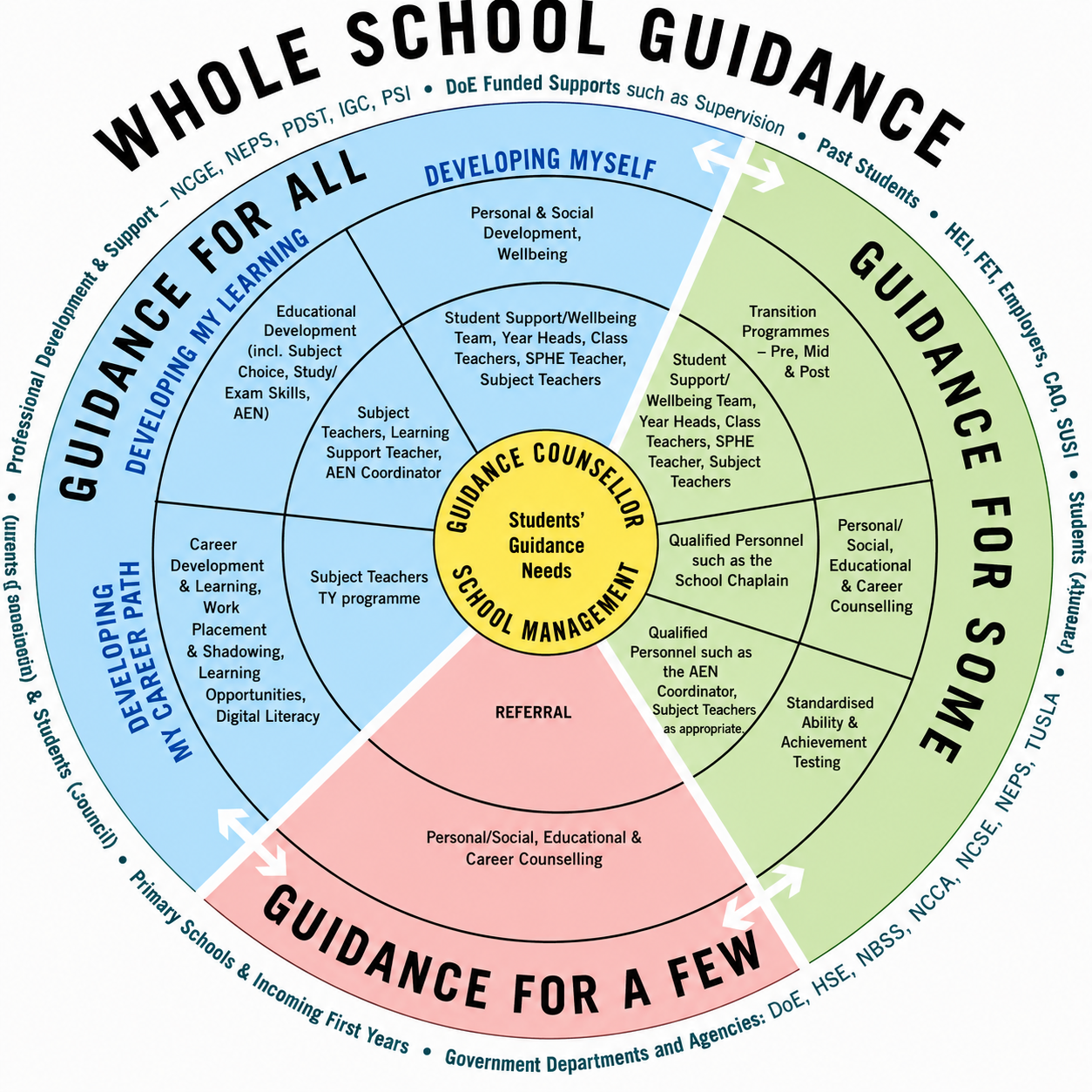
Our Guidance Department supports students in their personal, educational and career development throughout their time in Salerno.
- Subject choice
- Career planning
- CAO guidance
Wellbeing
Student wellbeing is at the heart of school life. Our wellbeing programme promotes confidence, resilience, belonging and positive mental health.
- Wellbeing programme
- Mental health awareness
- Student voice
Green Schools
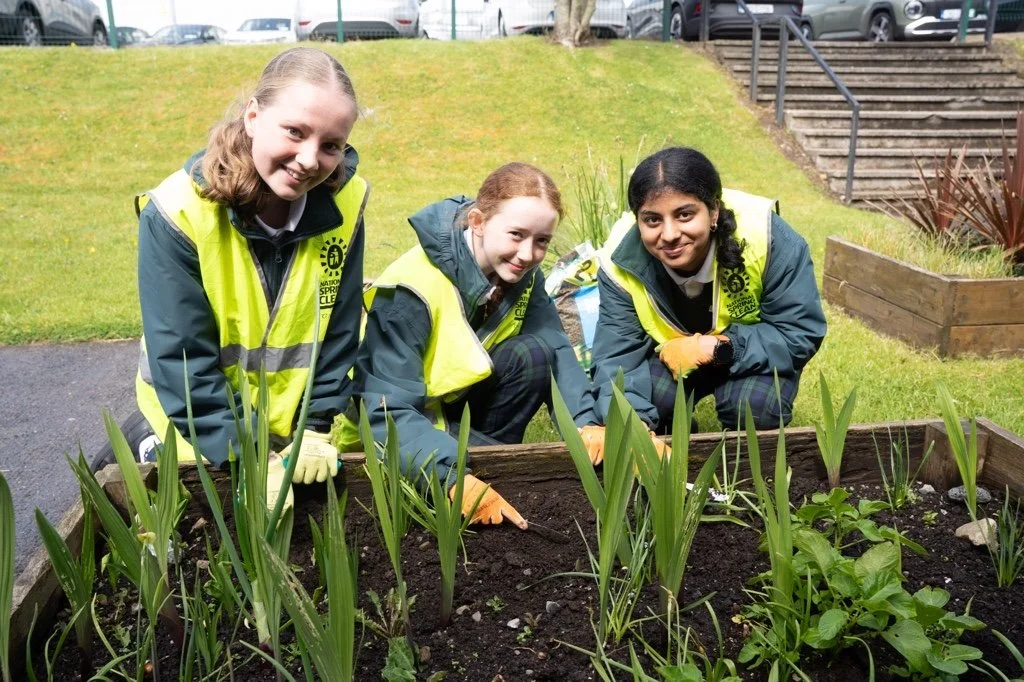
Students actively promote environmental awareness and sustainability through projects that benefit both the school community and the wider environment.
- Environmental awareness
- Recycling initiatives
- Sustainability projects
Chaplain’s Message
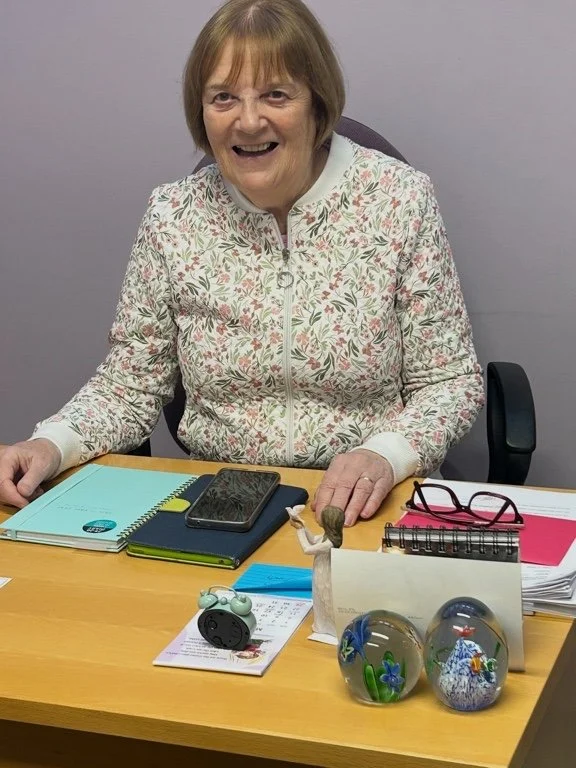
Sr Angela Maughan RJM,
As School Chaplain I see myself as a faith presence in the school community. My role is a supportive and caring presence focusing on accompanying and helping in the spiritual and human growth of the school community. I provide an open door where students, and all members of the school community, can come and receive a listening ear and support in a confidential and safe way.
My focus is person-centered. To the staff, students and parents, I see myself as one who offers support, compassion and encouragement. My role is very much about ‘being there’. This involves working closely with the Principal, Deputy Principal, Staff and Students and the wider school community.
Availability is both formal and informal. Where it is formal I set up meetings on a one-to-one basis with a view to addressing their spiritual and pastoral needs, the informal contact takes place my ’being around’ where the students congregate. I also spend time in the Staff Room chatting to staff members.
This contact may be at my own initiative or at the initiative of the student. A student may be referred to me by the Principal, Deputy Principal, Career Guidance Counsellor, Year Heads or any Staff member.